
Nexara Technology 04 · Non-Invasive Brain Stimulation · TBI · PTSD · Cognitive
Nexara
NeuroMind Therapy
Advanced non-invasive brain stimulation delivering precisely calibrated magnetic pulses to targeted neural circuits - addressing the cognitive, mood, and neurological symptoms that pain and trauma leave behind.
Understanding NeuroMind Therapy
Nexara NeuroMind Therapy is a non-invasive brain stimulation therapy that uses precisely calibrated magnetic pulses to directly modulate the neural circuits involved in mood, cognition, and pain processing - without medication, sedation, or any intervention that enters the body.
Chronic pain, traumatic brain injury, PTSD, and prolonged neurological stress all leave measurable changes in the brain. These changes are not "just psychological" - they are structural and functional shifts in neural activity that can be measured and, critically, addressed. NeuroMind Therapy targets these circuits directly, delivering a controlled sequence of magnetic pulses that reset aberrant neural firing patterns and restore more normal brain function.
This therapy is available through Nexara Institute for concierge patients and through Nexara Injury Recovery Center for personal injury patients. VA patients must be evaluated by a psychiatrist or specialized mental health provider who will submit a formal prescription for the therapy.
The Science, Simply Explained
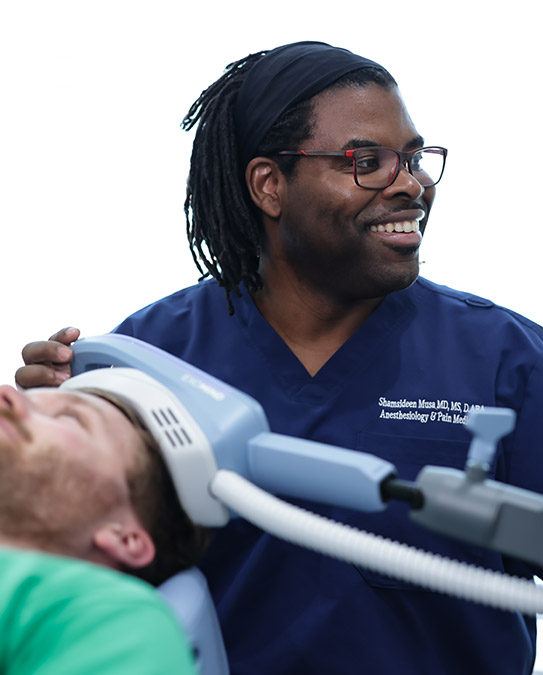
The treatment device generates a focused magnetic field that passes harmlessly through the skull and induces small electrical currents in targeted regions of the brain. These currents modulate the activity of neurons in the target circuit - either increasing or decreasing their activity depending on the stimulation parameters - producing lasting changes in neural function.
The specific brain regions targeted depend on the clinical indication. For depression and mood disorders, stimulation typically targets the prefrontal cortex. For TBI and cognitive symptoms, targeting may involve circuits involved in attention, memory, and executive function. For PTSD, targeting focuses on circuits involved in emotional regulation and fear processing.
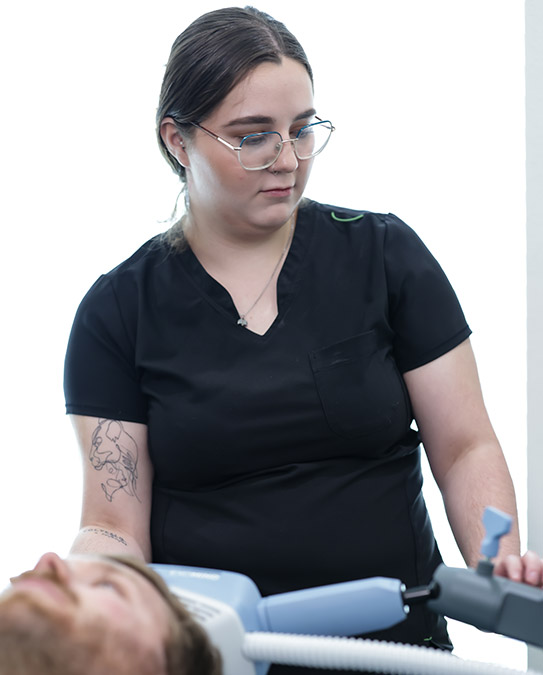
Each session is 20–40 minutes. You are seated comfortably and fully awake throughout - no anesthesia, no sedation. The treatment produces a gentle tapping sensation on the scalp. Many patients read or listen to music during sessions. You drive yourself home immediately after.
Is This Therapy Right for You?
Your Treatment Experience
Your first appointment begins with a thorough evaluation of your symptoms, history, and neurological status. Dr. Musa will determine whether NeuroMind Therapy is appropriate for you, identify the specific neural targets for your condition, and design a treatment protocol tailored to your clinical goals.
Standard treatment courses typically involve daily or near-daily sessions over 4–6 weeks, followed by maintenance sessions as indicated. Each session is 20–40 minutes. You sit in a comfortable recliner, a positioning device is placed against your scalp, and the treatment delivers its pulse sequence. The sensation is a gentle rhythmic tapping - most patients find it easy to tolerate from the very first session.
Many patients begin to notice changes in mood, energy, concentration, or sleep quality within the first two weeks. Full therapeutic effects are typically seen at the end of the initial course. There is no downtime - you return to all normal activities the same day.
Backed by Science
Transcranial magnetic stimulation - the technology underlying NeuroMind Therapy - has been studied extensively in peer-reviewed literature for depression, PTSD, TBI, and other neurological conditions. It has received FDA clearance for the treatment of major depressive disorder and is an active area of research for TBI, PTSD, and chronic pain.
For veteran patients, this therapy is covered under existing VA benefits. VA patients must be evaluated by a psychiatrist or specialized mental health provider who will submit a formal prescription for the therapy. This is an important access advantage that Dr. Musa and the Nexara team are committed to making available to eligible patients. Nexara Clinical Research is also conducting ongoing studies in this technology for TBI and PTSD in veteran populations.
Dr. Musa will discuss the specific evidence relevant to your diagnosis and what realistic clinical expectations look like for your individual case.
Ready to Learn if NeuroMind Therapy Is Right for You?
Schedule a consultation with Dr. Musa and get an honest assessment within days.
Common Questions About NeuroMind Therapy
This therapy is available at Nexara Institute for Pain & Neurorecovery